CertMon
SECURITY & CERTIFICATES
How to enable trusted HTTPS on localhost in Safari and Chrome on macOS
Getting "Your connection is not private" or NET::ERR_CERT_AUTHORITY_INVALID on localhost? Here is how to create a trusted local certificate authority using the command line.
Start in Terminal
Browsers reject self-signed leaf certificates unless they are signed by a Certificate Authority installed in the macOS Keychain with explicit trust settings. Run these commands:
# 1. Generate local CA key and certificate
openssl req -x509 -nodes -new -sha256 -days 3650 -newkey rsa:2048 \
  -keyout rootCA.key -out rootCA.pem \
  -subj "/CN=My Local Dev CA"

# 2. Add CA to macOS Login Keychain and trust for SSL
security add-trusted-cert -d -r trustRoot \
  -k ~/Library/Keychains/login.keychain-db rootCA.pem

# 3. Create config with Subject Alternative Names (SANs)
cat <<EOF > server.ext
authorityKeyIdentifier=keyid,issuer
basicConstraints=CA:FALSE
keyUsage = digitalSignature, nonRepudiation, keyEncipherment, dataEncipherment
subjectAltName = @alt_names
[alt_names]
DNS.1 = localhost
DNS.2 = *.localhost
IP.1 = 127.0.0.1
EOF

# 4. Generate leaf certificate signed by your local CA
openssl req -new -nodes -newkey rsa:2048 \
  -keyout server.key -out server.csr \
  -subj "/CN=localhost"
openssl x509 -req -sha256 -days 365 -in server.csr \
  -CA rootCA.pem -CAkey rootCA.key -CAcreateserial \
  -out server.crt -extfile server.ext
Why it happens
Modern browsers—especially Safari and Chrome—ignore the certificate's Common Name (CN) and require a valid subjectAltName (SAN) extension. Furthermore, browsers require the issuing CA to have basicConstraints=CA:TRUE and be explicitly marked as trusted in the user or system trust store.
If you only generate a self-signed leaf certificate without a separate CA, you must manually mark every individual leaf certificate as trusted in Keychain Access every time it expires or changes.
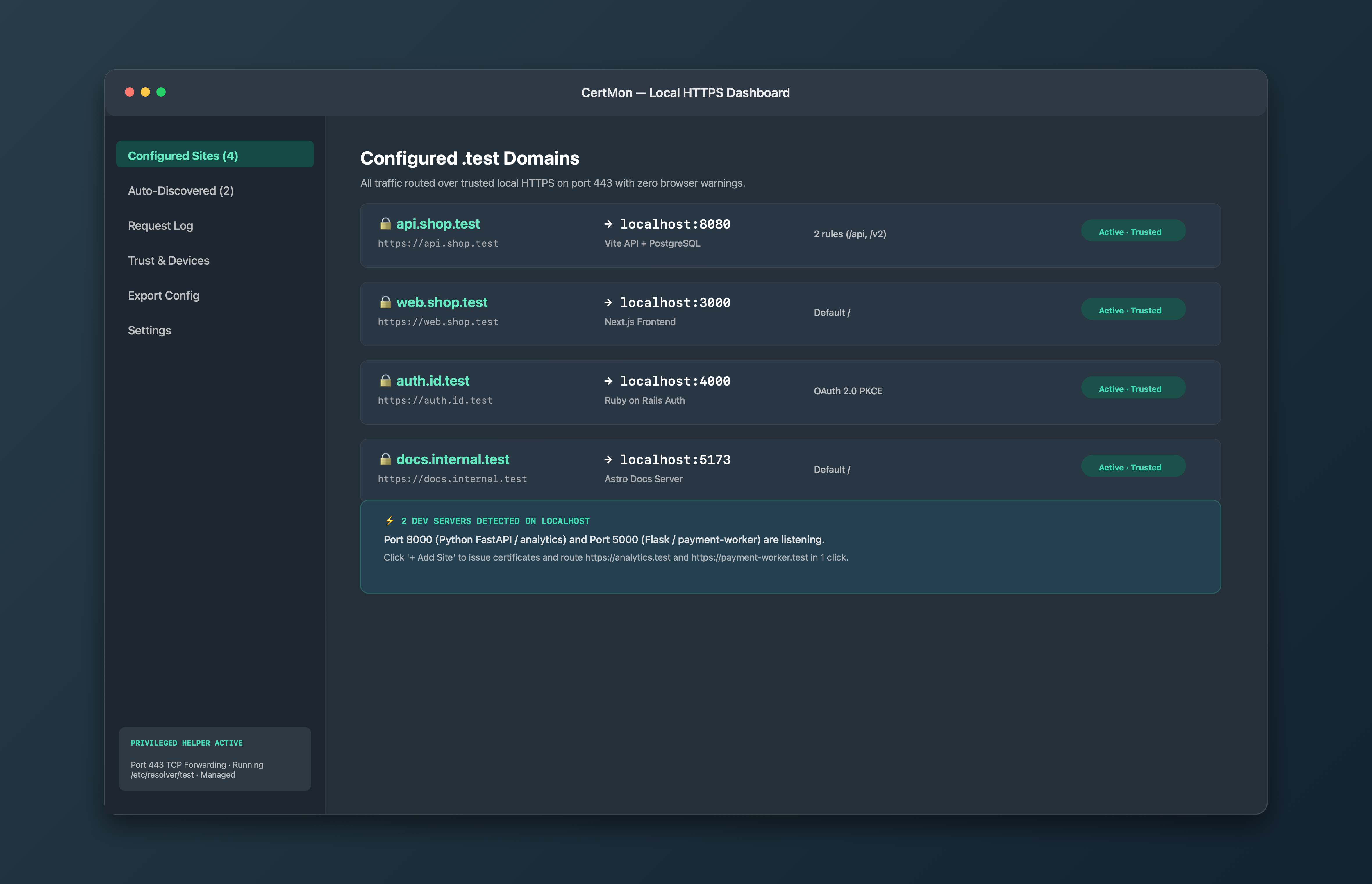
The easier way with CertMon
CertMon automates this entire process inside macOS without OpenSSL commands. It creates a local CA in your Keychain, issues SAN certificates for any .test domain in milliseconds, and routes traffic on port 443 with zero configuration.